

Michigan Criminal Sexual Conduct In The 1st Degree: Law Explained
Michigan Sexual Assault Lawyer Free Consultation
Hold your perpetrator accountable. Get the compensation and money damages you deserve. Request your free consultation today.
"*" indicates required fields
Criminal sexual conduct in the 1st degree (CSC-1) is the most serious sexual assault charge under Michigan law. It applies when sexual penetration occurs under specific aggravating circumstances, such as when force, coercion, or a victim’s age or vulnerability is involved.
In Michigan, criminal sexual conduct in the 1st degree is punishable by up to life in prison. Survivors of this violent crime often face lasting trauma, physically, emotionally, and financially. Understanding the criminal process, potential civil remedies, and your rights to confidentiality can help you take the next step toward justice and healing.

Because 1st degree criminal sexual conduct cases are complex and emotionally devastating, it is critical to have a Michigan sexual assault lawyer who understands both the criminal justice system and the unique challenges survivors face. An experienced sexual assault attorney will protect your rights, handle every legal aspect of your case, and make sure your voice is heard.
At our law firm, our attorneys are trusted advocates and experienced at handling criminal sexual conduct and related civil cases throughout the date. We fight for survivors with compassion and skill, helping you find justice, protect your identity, and recover the compensation you deserve.
What is 1st degree criminal sexual conduct in Michigan?
Under MCL 750.520b, criminal sexual conduct 1st degree is a felony crime that involves sexual penetration under any of several aggravating circumstances. It is a felony punishable by up to imprisonment for life.
In Michigan To prove criminal sexual conduct in the 1st degree (CSC-1), prosecutors must show that sexual penetration occurred and that one or more of the following aggravating factors were present:
- The victim was under 13 years old.
- The victim was between 13 and 15 years old, and one of the following applied:
- The defendant lived in the same household as the victim
- They were related by blood or marriage within the fourth degree
- The defendant used a position of authority (such as teacher, coach, or guardian) to coerce the victim
- The defendant worked for or volunteered at the victim’s school or childcare setting and used that role to gain access or trust
- The sexual penetration occurred while another felony was being committed.
- The defendant acted with one or more other people, and either:
- The victim was mentally incapacitated or physically helpless
- The defendant used force or threats to make the victim submit
- The defendant was armed with a weapon or something that looked like one.
- The victim suffered injury and force or coercion was used. Coercion can include:
- Physical violence or threats of harm
- Threats of future retaliation or punishment
- Unethical or non-consensual medical examinations
- Using surprise or concealment to overpower the victim
- The victim was injured and unable to consent because of mental incapacity or physical helplessness
- The victim was mentally or physically unable to consent, and the defendant was either:
- A relative within the fourth degree
- In a position of authority who used that power to obtain submission
What are the penalties for 1st degree criminal sexual conduct Michigan?
The penalties for 1st degree criminal sexual conduct are among the harshest in Michigan’s criminal code. Under MCL 750.520b(2), the offense is punishable by imprisonment for life or for any term of years. Here are the potential punishments:
- General penalty – Up to life in prison or any term of years, depending on the facts of the case and the offender’s background. (MCL 750.520b(2)(a))
- Victim under 13 and offender 17 or older – Mandatory minimum sentence of 25 years in prison, up to life. (MCL 750.520b(2)(b))
- Repeat offenders – In our state, if an 18-year-old or older defendant has a prior conviction for any CSC offense involving a victim under 13, the penalty is life in prison without the possibility of parole. (MCL 750.520b(2)(c))
- Lifetime electronic monitoring – If the defendant is 17 years of age or older and the victim is less than 13 years of age, the defendant upon conviction “shall be sentenced to lifetime electronic monitoring.” (MCL 750.520b(2)(d); MCL 750.520n(1))
- Consecutive sentences – In Michigan, courts may order that a 1st degree criminal sexual conduct prison term run consecutively to any sentence for “any other criminal offense” arising from the same incident. (MCL 750.520b(3))
- Sex Offender Registry – In Michigan, a person convicted of 1st degree criminal sexual conduct must register on the Sex Offender Registry for life. (MCL 28.723(1)(a); MCL 28.722(v)(iv) (CSC-1 is a Tier III “listed offense”; MCL 28.725(13))

Courts may also order restitution for counseling costs, lost wages, and medical expenses.
Survivors of 1st degree criminal sexual conduct in Michigan often experience lifelong trauma. Even if the criminal case results in conviction, survivors may still file a civil lawsuit seeking damages for emotional distress, medical costs, and other losses related to the assault. An experienced sexual assault lawyer can help you every step of the way.
Do I need a lawyer?
In Michigan, for survivors of 1st degree criminal sexual conduct, hiring an experienced sexual assault lawyer can mean the difference between silence and justice.
A skilled attorney from our law firm can:
- Guide you through the criminal process – Explaining each stage, from police reports to court appearances.
- Coordinate with prosecutors – Ensuring your rights and safety are protected throughout the criminal proceedings.
- Pursue civil remedies – Helping you seek financial compensation through a separate civil action.
- Preserve confidentiality – Filing motions to protect your identity or to proceed as “Jane Doe” or “John Doe.”
- Hold institutions accountable – Investigating schools, hospitals, or employers that failed to prevent or report abuse.
- Advocacy and support – Helping survivors connect with advocacy programs and counseling services.
Our experienced sexual assault lawyers are here to answer any questions you may have about your case.
How do I file a civil lawsuit related to a 1st degree criminal sexual conduct case in Michigan?
A civil lawsuit allows survivors to recover damages for the harm they’ve suffered. Even if no criminal conviction occurs, a survivor can still pursue a civil claim because the burden of proof is lower (“preponderance of the evidence” as opposed to “proof beyond a reasonable doubt” which applies in criminal cases).
In Michigan, survivors of 1st degree criminal sexual conduct may bring civil claims against:
- The perpetrator – For assault, battery, or intentional infliction of emotional distress.
- Employers, institutions, or organizations – If they negligently hired, supervised, or retained the offender and the offender committed the assault within the scope of his or her employment.
- Schools, churches, or medical facilities – If they failed to provide adequate safeguards or reporting procedures.
A qualified attorney will investigate all potential defendants, gather evidence, and file suit in the appropriate court. Evidence may include witness statements, police reports, medical records, digital communications, or prior complaints against the perpetrator.
How long do I have to file a civil lawsuit?
Under Michigan law, adult survivors of 1st degree criminal sexual conduct have up to 10 years from the date of the attack to file a civil lawsuit seeking compensation and damages. (MCL 600.5805(6))
Survivors who were minors at the time of their assault have until the latter of following events occurs, according to State law (MCL 600.5851b(1)):
- “The individual reaches the age of 28 years.”
- “Three years after the date the individual discovers, or through the exercise of reasonable diligence should have discovered, both the individual’s injury and the causal relationship between the injury and the criminal sexual conduct.”
Because statutes of limitations on sexual assault are complex and sometimes extended by new legislation, survivors should consult our experienced attorneys as soon as possible to preserve their rights.
What type of compensation is available?
In Michigan, civil lawsuits for 1st degree criminal sexual conduct can provide compensation for both economic and noneconomic damages, including:
- Medical and psychological care expenses – Including hospitalization, doctor visits, surgery, psychiatric therapy, psychological therapy, medication, and long-term counseling.
- Lost income and reduced earning capacity – For time away from work or permanent career impact.
- Pain and suffering – Encompassing physical pain, emotional distress, trauma, anxiety, and loss of enjoyment of life.
- Loss of consortium or companionship – When relationships are damaged by trauma.
- Exemplary damages – In cases where the perpetrator’s conduct was willful, malicious or wanton and was engaged in with reckless disregard for a victim’s rights, exemplary damages may be awarded to compensate the victim for mental anguish, humiliation, outrage, indignity and/or increased injury to the victim’s feelings.
These categories of compensation are authorized under our state’s civil damages statutes (MCL 600.6305) and model jury instructions (M Civ JI 50.02 and related provisions).
What elements must be proven for a 1st degree criminal sexual conduct charge in Michigan?
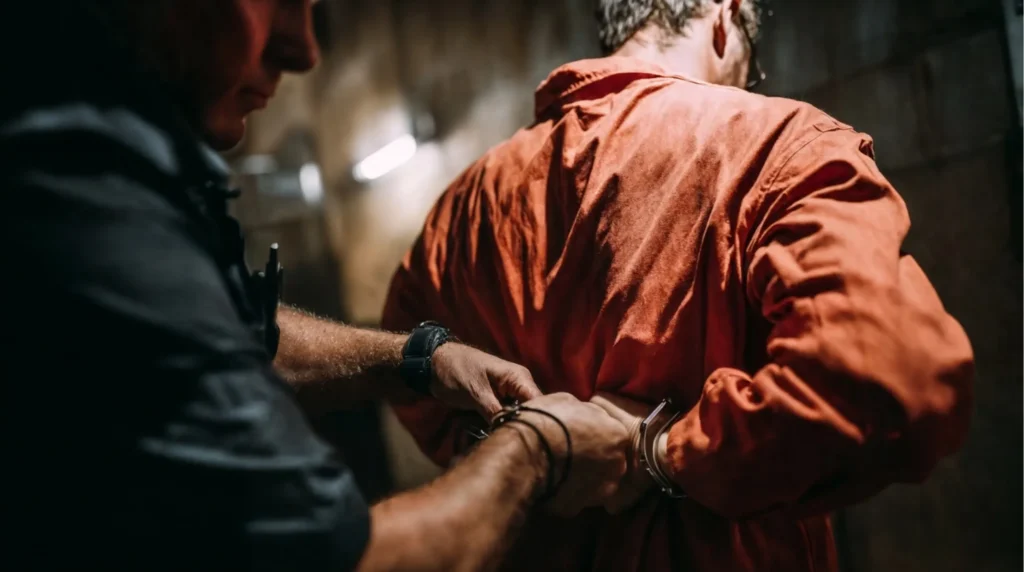
In Michigan, to convict a defendant of 1st degree criminal sexual conduct, the prosecution must prove each element of the crime beyond a reasonable doubt. Our state’s M Crim JI 20.1 explains that the prosecutor must establish both sexual penetration and one or more of the aggravating circumstances listed in MCL 750.520b.
Specifically, the prosecutor must show:
- A sexual penetration occurred – “Sexual penetration” includes any intrusion, no matter how slight, into the genital or anal openings of another person. The jury instruction provides that “any entry, no matter how slight, is enough. It does not matter whether the sexual act was completed or whether semen was ejaculated.”
- An aggravating circumstance or circumstances existed – At least one of the following must be proven:
- The victim was under 13 years old, or was 13 to 15 and the defendant held a position of authority
- The assault involved force, coercion, or a weapon
- The defendant aided or abetted others in the assault
- The victim was physically helpless, mentally incapacitated, or mentally incapable of consent
- The penetration occurred during the commission of another felony
Each aggravating factor comes from subsections (a)–(h) of MCL 750.520b(1). The instruction also directs that if multiple acts are alleged, the jury must be unanimous as to at least one act of penetration but need not agree on which aggravating factor was proven, so long as all jurors find one or more aggravating circumstances beyond a reasonable doubt.
In short, the prosecution must prove:
- A sexual act involving penetration, however slight; and
- At least one aggravating circumstance described in the statute.
In Michigan, failure to prove either element means a 1st degree criminal sexual conduct charge cannot stand.
Are there ways to keep my identity or information confidential in my case?
Our State law recognizes the sensitive nature of sexual assault cases and allows survivors to seek anonymity in legal filings.
Proceeding Under a Pseudonym (Jane Doe or John Doe)
Sexual assault survivors may request permission to file civil cases pseudonymously. And State courts recognize that these survivors may face serious privacy and safety concerns if their identities become public. As such, courts have allowed plaintiffs to proceed under pseudonyms such as “Jane Doe” or “John Doe” in certain cases.
In Doe v. Bodwin, our State Court of Appeals held that the right to proceed anonymously is not absolute, but noted that the most common cases allowing party anonymity involve the presence of some social stigma or the threat of physical harm to the plaintiff. Among the factors to be considered are whether: (1) prosecution of the suit compels the plaintiff to disclose information of a private nature; (2) the plaintiff seeks to challenge governmental or private activity; and (3) the plaintiff is compelled to admit an intention to engage in illegal conduct. Other cases such as Doe v. University of Michigan Board of Regents and Doe v. Borromeo affirm these factors.
The bottom line is that our State courts will evaluate requests for pseudonymity by considering the survivor’s privacy interests, the potential for emotional harm or retaliation, the sensitivity of the subject matter, and whether anonymity would unfairly prejudice the defendant.
Protective Orders and Sealing Records
In both criminal and civil cases, survivors can request protective orders to seal sensitive information such as medical records, addresses, or therapy notes. Judges can also close courtrooms for portions of testimony involving highly personal details.
Have you been the victim of criminal sexual conduct in 1st degree in Michigan? Let our attorneys help you get the justice you deserve!
If you’ve been a victim of criminal sexual conduct in the 1st degree in Michigan, the aftermath can be overwhelming—but you don’t have to face it alone. Whether you’re considering reporting it to the police, pursuing a civil claim, or protecting your identity through confidential filings, our attorneys are here to guide you every step of the way.
The experienced team at Michigan Sexual Assault Lawyers combines compassion with courtroom experience. We work tirelessly to help survivors of criminal sexual conduct rebuild their lives and hold offenders, and negligent institutions, accountable.
We can help you:
- Understand your rights and legal options under state law
- Connect with trauma-informed professionals for medical and emotional support
- Protect your privacy through careful case management and, when appropriate, pseudonymous filings
- Pursue justice through both criminal advocacy and civil compensation claims.
Our firm has built its reputation on helping survivors achieve justice with integrity, discretion, and unwavering advocacy. If you or a loved one has been sexually assaulted, don’t wait. Call our lawyers today for a free, completely confidential consultation.
Published:
Have Questions? Our Call Our Attorneys Now For A Free Consultation!
Understanding the Michigan statute of limitations for sexual assault can be overwhelming — especially while dealing with the emotional and physical impact of what you’ve endured. Our compassionate and experienced lawyers are here to help every step of the way.
We can explain how the law applies to your case, ensure all deadlines are met, and fight to secure the justice, accountability, and compensation you deserve. Call us today or fill out our contact form for a free, completely confidential consultation with a Michigan attorney who truly cares about protecting your rights.
Contact Us for Free Legal Advice
"*" indicates required fields